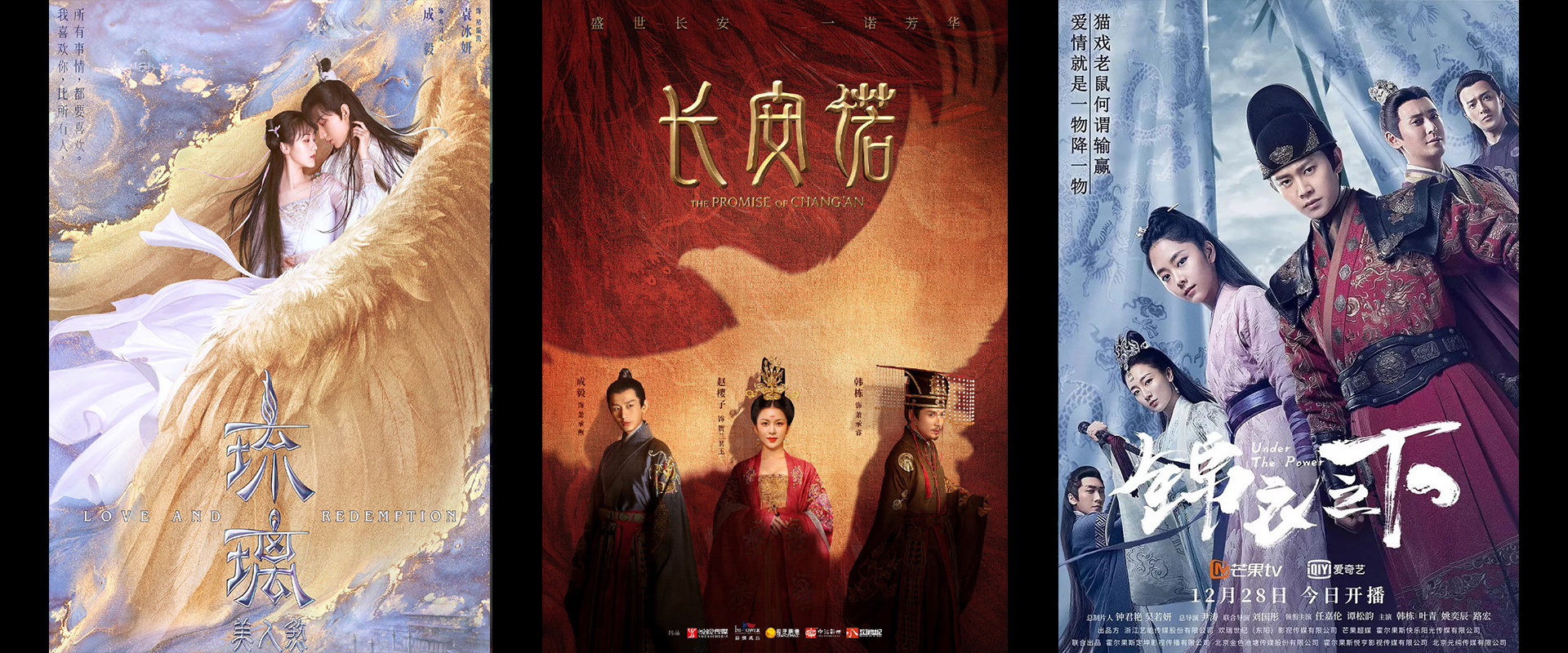

Film and television costumes
- Product Description
- Video
- Image
-
Director: Chen Yanmin
Starring: Siqin Gaowa / Wen Zhengrong / Zhang Tielin / Li Xinyi
First aired: 2006
Plot Summary:
The story begins during the Zhenguan era of the Tang Dynasty.
After spending more than a decade in the imperial court, largely unnoticed, Wu Meiniang was elevated to the rank of a talented concubine at Emperor Taizong’s side. It was then that she finally encountered an opportunity that won her the emperor’s keen admiration. As Taizong began to take her more seriously, she and Crown Prince Li Zhi grew increasingly familiar with one another; each formed a deep impression of the other and developed a strong mutual affection.
Upon the passing of Emperor Taizong of Tang, Wu Meiniang, in accordance with palace regulations, took the vows and became a nun at Ganyue Temple outside Chang’an. Unwilling to spend the rest of her life in such obscurity, she seized an opportunity to return to the imperial harem when Emperor Gaozong, Li Zhi, came to the temple to offer incense. With the birth of her son, she rose from a palace maid to the rank of Zhaoyi, and eventually ascended to the position of empress. Relying on her unique wisdom and courage, she steadily removed all obstacles, vanquished her longstanding rivals, and firmly established herself upon the phoenix‑adorned throne of the harem.
Having consolidated her own position, Empress Wu began to assist her husband in conducting state affairs. She resolutely eliminated political rivals, bringing governance firmly under the control of the imperial harem. During this period, she submitted twelve policy proposals to the emperor—known in history as the “Twelve Petitions.” Emperor Gaozong, Li Zhi, lavished praise on her suggestions and issued an edict approving their implementation. The couple worked in perfect harmony to govern the realm, earning them the appellation “the Two Sages.”
With Emperor Gaozong frail and ill, unable to attend court, Empress Wu shouldered the empire’s momentous responsibilities and demonstrated extraordinary statesmanship. The Tang Empire rose with unparalleled might among the nations of the world.
After Emperor Gaozong’s passing, with the emperor muddled and the court in darkness, she—then the empress dowager—resolutely deposed the incompetent and self‑serving Emperor Zhongzong, Li Xian. With decisive resolve, she quelled a rebellion that had erupted within the imperial clan, and through measures that overcorrected past errors, swiftly brought the opposition under control. As a result, the nation’s situation improved day by day, and the people grew ever more devoted to this woman of both courage and wisdom.
In order to safeguard her realm, Empress Wu, acting in accordance with the mandate of heaven and the will of the people, ascended the throne and became emperor. Thus, Chinese history witnessed its first—and only—female emperor.
After ascending the throne, Empress Wu adopted even more sweeping measures, implementing a series of bold political reforms and achieving remarkable administrative successes. She overhauled the traditional imperial examination system, instituting the palace examination and breaking with conventional practices to recruit talent from all walks of life. She also established the martial arts examination, cultivating well‑trained officers for the military. Skilled in recognizing and employing capable individuals, she filled her court with outstanding figures. Throughout the realm, she vigorously promoted agriculture, reduced taxes, and lightened the tax burden, first enriching the people and then strengthening the state. Confronted with external threats, she stood firm, decisively pacifying the border regions. Devoted to Buddhism and Daoism, she quelled sectarian disputes, and—prompted by self‑criticism in the face of criticism—she championed the redress of wrongful convictions, rescuing a host of talented statesmen, including Di Renjie, from the clutches of ruthless officials.
In the end, as her life drew to a close, she did not allow the Wu clan’s descendants to inherit the imperial throne; instead, she returned the realm to the Li Tang dynasty. She left behind for posterity a monument without a single word…
Previous page
Next page
Previous page
Next page
Contact Us
No. 156, Caihe New Village, Shahe Town, Changping District, Beijing
Follow us
Public account
Official Weibo
Fashion app
Copyright © Beijing Zhu’s Brothers Cultural Communication Co., Ltd. Website Development:China Enterprise Dynamics Beijing Business license