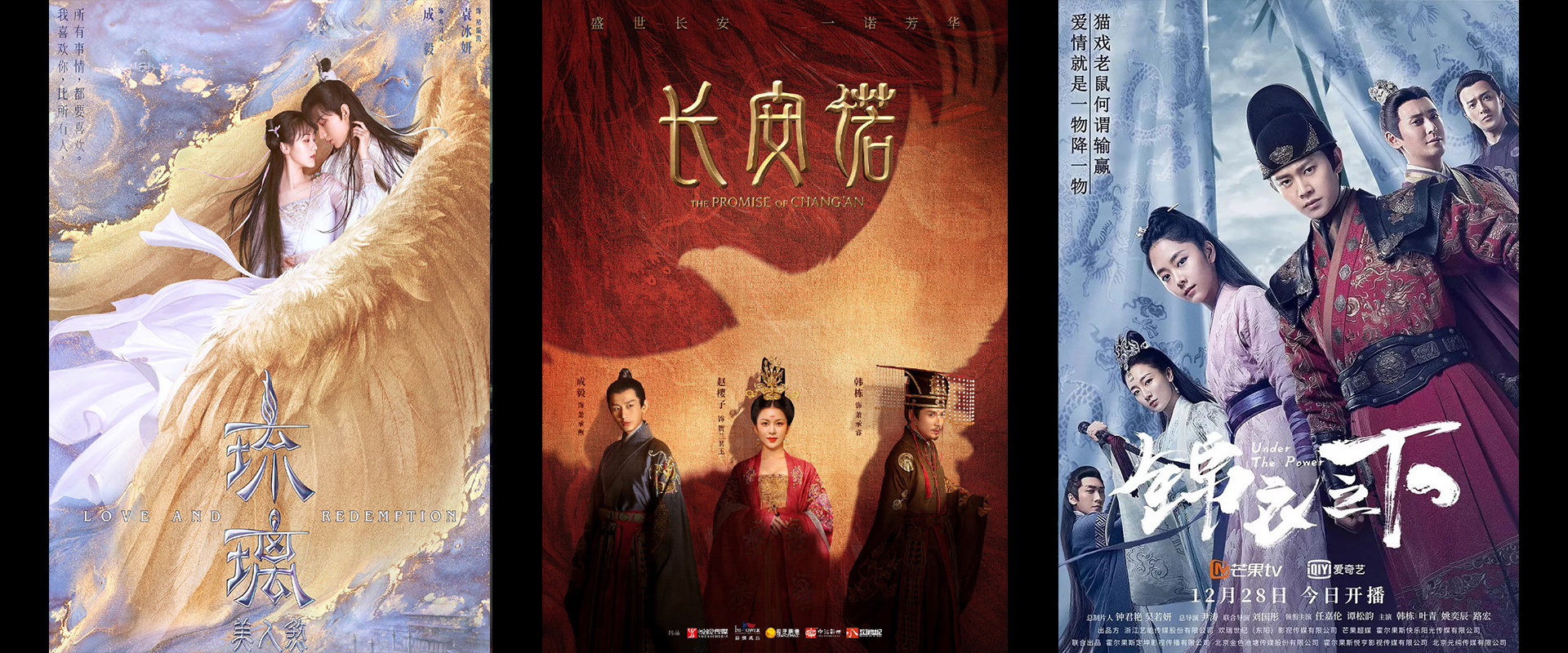

Film and television costumes
- Product Description
- Video
- Image
-
Director: Ning Haiqiang
Starring: Wu Jing’an / Peng Dan / Feng Guoqing / Wang Hucheng
First aired: 2006
Plot Summary:
In the nineteenth year of the Kangxi reign, the Qing dynasty’s campaign to quell the “Three Feudatories” rebellion had lasted seven years and had already secured a decisive victory. Emperor Kangxi hosted a grand banquet for all his ministers in the Hall of Mental Cultivation, the atmosphere brimming with fervor. At this juncture, Shi Lang rose to address the emperor, asserting that since the realm was not yet unified, it was premature to celebrate. He proposed that the forces engaged in suppressing the rebellion be redeployed en masse toward the east, with a powerful military presence firmly established, in order to resolve the Taiwan question. However, Shi Lang’s memorial met with opposition.
In the twentieth year of the Kangxi reign, the imperial guards Feng Xifan and Consort Tang colluded to instigate fratricidal strife at the Beiyuan Villa in Taiwan, while simultaneously seizing the young Prince of Yanping, Zheng Keshuang, and consolidating absolute power over the island. Clinging to their maritime stronghold, they repeatedly rejected the Qing court’s offers of pacification and negotiation, hatching a plot to “establish their own empire.” Despite her advanced age, Empress Dowager Dong braced herself against Taiwan’s precarious situation, solemnly declaring: “To establish an independent empire and split the nation—never! Should anyone again dare to speak of such a scheme, there will be no mercy!”In the third month of the twenty-first year of the Kangxi reign, when Shi Lang was formulating the operational plan for the invasion of Penghu and Taiwan, he clashed with Fujian Governor-General Yao Qisheng over every detail. In August, during the morning audience known as “Yumen Tingzheng,” the Kangxi Emperor entrusted Shi Lang with sole authority to lead the campaign against Penghu and Taiwan. On the eve of the expedition, Shi Lang dispatched his entire family—more than a dozen young children who had yet to experience the world—to board the various warships, thereby demonstrating his unwavering resolve to wage war.In the sixth month of the 22nd year of the Kangxi reign, Shi Lang commanded more than three hundred warships and led over thirty thousand officers and soldiers, setting sail from Tongshan Harbor and advancing toward Penghu on the favorable south wind. At the decisive battle of Penghu, after five hours of fierce fighting, the Qing forces emerged victorious. With Penghu lost and the navy annihilated, Taiwan was left without its protective barrier. The Prince of Yanping convened all his officials to deliberate Taiwan’s fate. The ministers rejected both the “fight to the bitter end” advocated by some and Hong Xu’s “abandonment‑of‑the‑island” plan, instead endorsing Liu Guoxuan’s position: peace would ensure survival, while renewed warfare would spell certain ruin. At this critical juncture, the young Prince of Yanping, Zheng Keshuang, made a resolute decision: Liu Guoxuan would be entrusted with negotiating peace with the Qing court. On the thirteenth day of the eighth month, Shi Lang led his elite troops ashore at Luye Gate, pressing straight toward Longting. On the fifteenth day of the eighth month, a solemn ceremony marking Taiwan’s incorporation into the Qing realm was held in the square before the Confucian Temple, where Shi Lang proclaimed the imperial edict of Emperor Kangxi accepting Taiwan’s submission to the Qing dynasty. On the twenty-second day of the eighth month, Shi Lang paid homage at the shrine of Zheng Chenggong, offering incense and prostrating himself in prayer, tears streaming down his face as he made his heartfelt supplication, his countenance filled with profound sorrow.In the eleventh month of the twenty-second year of the Kangxi reign, with the transfer of authority over Taiwan now complete, Shi Lang and his fleet returned safely to Xiamen. Zheng Keshuang was granted a noble title by the Qing court, and his relatives were likewise appointed to official posts of the third and fourth ranks; Liu Guoxuan, meanwhile, was conferred the post of General-in-Chief of Tianjin.In the fourth month of the twenty-third year of the Kangxi reign, the emperor issued an edict establishing one prefecture and three counties in Taiwan and ordering troops to be stationed there for its defense. Shi Lang remained in his post as Commander-in-Chief of the Fujian Naval Forces. In the second month of the thirty-fifth year of the Kangxi reign, Shi Lang died at the age of seventy-six.
Contact Us
No. 156, Caihe New Village, Shahe Town, Changping District, Beijing
Follow us
Public account
Official Weibo
Fashion app
Copyright © Beijing Zhu’s Brothers Cultural Communication Co., Ltd. Website Development:China Enterprise Dynamics Beijing Business license